You've Probably Already Talked to Them
About 30–40% of the customers who call us have already had a conversation with a launch monitor manufacturer. Usually Trackman, Full Swing, or GolfZon. They came in through the manufacturer's website, saw an installation offer, and are now price-checking us or looking for a reason to go one direction or the other.
We're not going to pretend these are bad products. We sell them. They make excellent launch monitors, and most of our builds are centered on one of these systems. The question isn't whether they make good technology. The question is whether buying that technology directly from them gets you the same outcome as hiring a company that does this — and only this — every day.
It doesn't. Here's why.
What Manufacturers Are — and Aren't
Golf simulator manufacturers are technology companies. Their business is R&D, manufacturing, and selling hardware and software. Trackman's core product is a radar-based launch monitor. Full Swing's core product is an impact screen and a software platform. GolfZon's core product is a camera-based sensor system with simulation software.
Those are genuinely good products. That's why we carry them.
The service side of their business — design, installation, project coordination — exists because customers want it to. But it's not where they make their money, and it's not where their investment and focus go. Service businesses are harder to manage and lower in margin than product businesses. The predictable result: the service offering is functional for straightforward situations and under-resourced for anything else.
What "anything else" looks like in practice is the rest of this article.
What You Get From a Manufacturer: A Kit
When you buy direct from a manufacturer, what you're getting is a kit. A predetermined set of components that fit a predetermined set of conditions. The launch monitor. A standard enclosure. Standard turf. Standard mounting hardware. Average pre-planning in the form of basic room sizing: what dimensions you need, what ceiling height, where to place the screen.
For a square room with standard dimensions, this works. The kit fits. It gets installed. It runs.
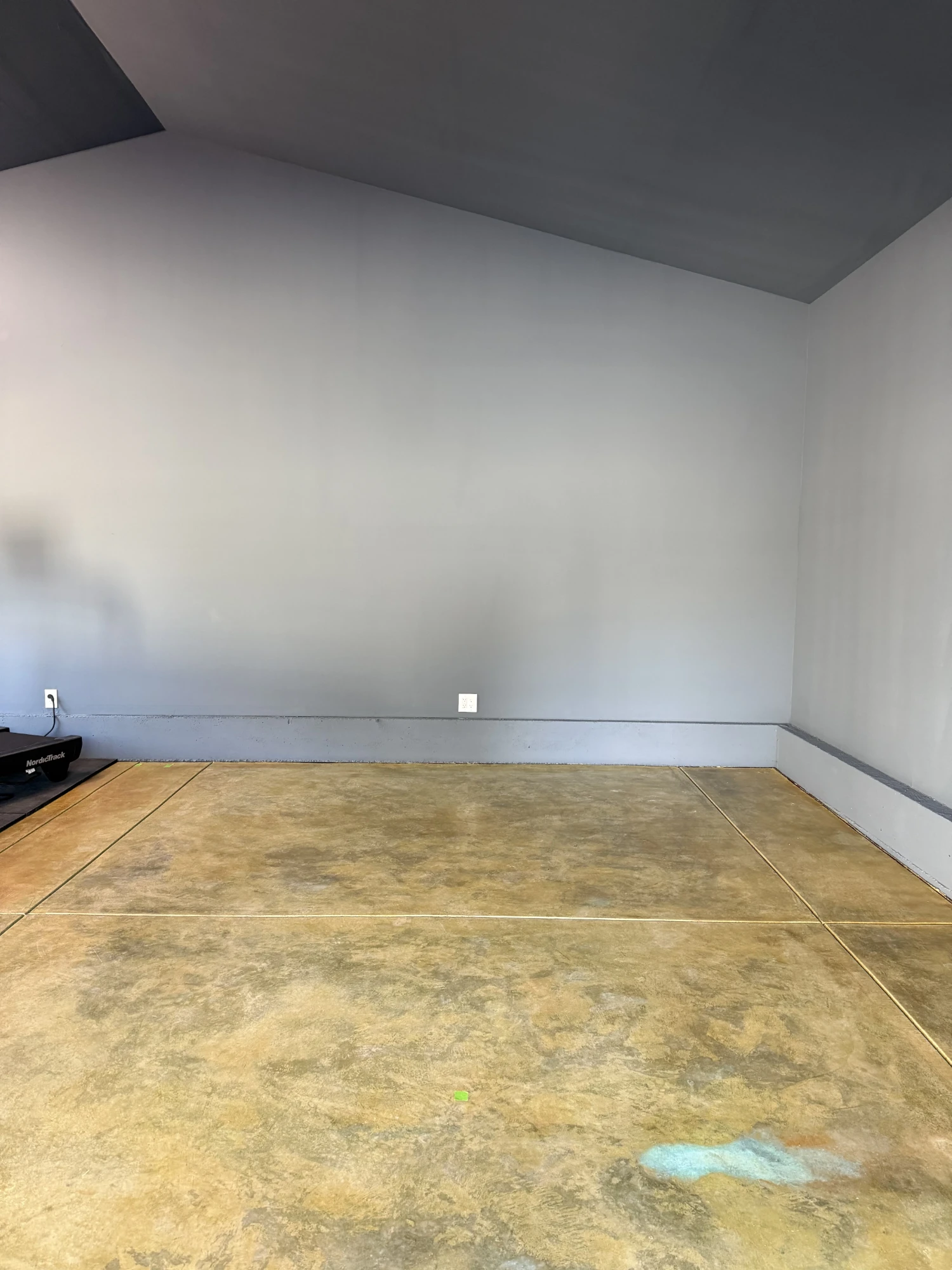
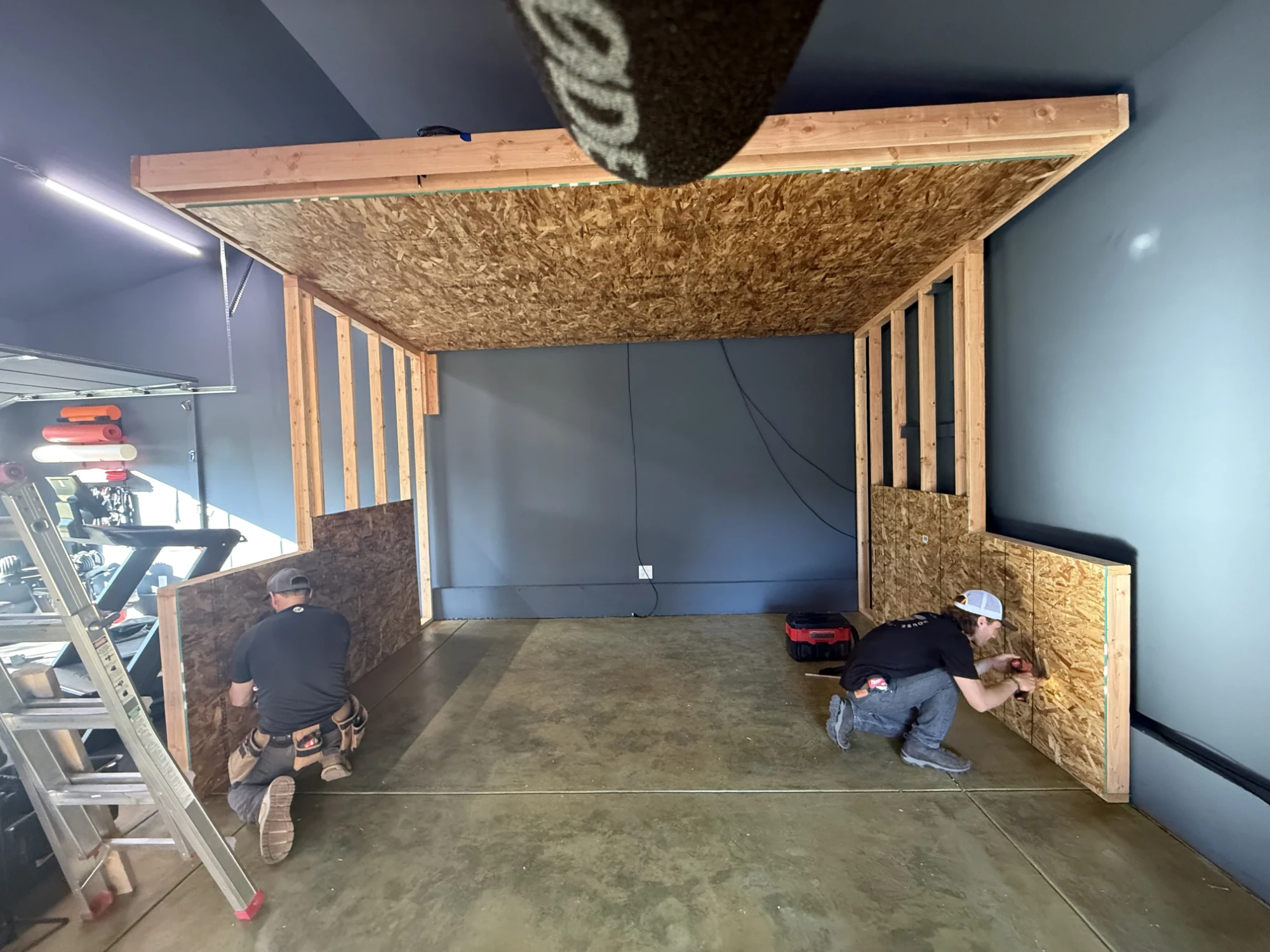
For anything else — a room with an odd angle, a ceiling that slopes, dimensions that are close but not quite, a space that needs to serve multiple purposes — the kit becomes a problem. Manufacturers don't do custom work. That's not in their scope. If your space doesn't fit their box, they'll either try to fit you into the box anyway or tell you the space won't work.
We've received referrals from customers turned down by both Full Swing and Trackman because the spaces were too complex for standard installation. Those are some of our favorite projects. Complex spaces with good bones can deliver remarkable results — they just require someone willing to solve the problems rather than force a template onto them.
What "Project Manager" and "Professional Team" Actually Mean
Each of the major manufacturers describes their installation support differently. Full Swing offers a project manager. Trackman has a professional setup team. GolfZon's position is more transparent: prepare the room to spec and they'll handle the technology installation.
These sound like meaningfully different offers. They aren't. In practice, all three put the same constraints on you: the room needs to be ready, the dimensions need to meet their requirements, and anything outside those parameters is your problem to figure out. The project manager and the professional team are trained on standard installations. They have playbooks that work for standard rooms. When something falls outside the playbook, they don't have the experience — or frankly the incentive — to improvise.
They won't coordinate with your general contractor. They won't provide electrical mapping for your electrician. They won't reroute HVAC to clear ceiling height. They won't tell you that your framing was done incorrectly and here's how to fix it before the concrete sets. Those things happen on our projects constantly. That's not a complaint — it's the work.
A Simulator Has 20–28 Components. They Sell One.
A fully built golf simulator room isn't just a launch monitor. It's a launch monitor, an impact screen, a projector, an enclosure system, turf, impact padding, a high-performance PC, software, data monitors, cabling, mounts, and often add-ons like supplementary displays, lighting systems, audio, or custom millwork. The component count on a complete build typically runs between 20 and 28 distinct pieces.
Manufacturers design, test, and sell one of those components. Everything else — the projector, the screen, the enclosure, the cabling — gets standardized around their core product to make installation simpler. The result is a room that works, but one that's constrained by the decisions they made to simplify their own process.
We source, test, and integrate all 28 components. We mix and match across manufacturers to build what actually performs best in a given space. We're not locked into an enclosure because it's the one that came in the same box as the launch monitor. We're not stuck with a projector spec because it's what the manufacturer tested against their own screen at their own throw distance. Every component gets evaluated on its own merits for the specific room we're building.
- One component designed in-house; rest standardized around it
- Kit fits a predetermined box — room must conform to it
- Average pre-planning; basic room sizing
- No GC coordination, electrical mapping, or HVAC routing
- No custom pads, angles, or unusual ceiling work
- Service team trained on standard installs only
- Post-install support through a large organization
- 20–28 components sourced and integrated across brands
- Room drives the design — no predetermined box
- Full 3D modeling; tolerances checked to fractions of an inch
- Direct coordination with GC, electrician, and all trades
- Custom pads, unusual ceiling work, non-standard angles
- Hive-mind team with experience across 200+ diverse builds
- Post-install support from the same people who built it
We're Brand-Agnostic. Here's What That Actually Means.
We carry the best launch monitors across three tiers. We're not going to tell you which one you need until we understand your space, your budget, and how you intend to use the room. We don't stock inventory that we need to move. We don't have a financial reason to push you toward one launch monitor over another.
What that means in practice: if the right launch monitor for your space is a Foresight Falcon — which we don't actively rep — we'll source it and build around it. If a ProTee VX at a third of the cost of Trackman delivers the same player experience in a commercial facility, we'll tell you that and explain why. See our launch monitor comparison for the full breakdown.
Manufacturers, by definition, can't be brand-agnostic. Their job is to sell their product. That's not a criticism — it's just what they are. When a manufacturer recommends their system, they're recommending it because it's their system. When we recommend a system, it's because it's the right answer for the specific build.
The Custom Work They Won't Do
Here's a short list of things that come up on almost every project we do — things manufacturers explicitly don't handle:
- Electrical mapping for your electrician. Where the power needs to go, how it needs to be routed, what capacity is required — we provide this to your electrician before they start. Manufacturers won't.
- GC plans and framing specifications. If you're in new construction, we tell your builder exactly what the space needs to look like. We can catch a "11 feet wide is fine for a golf sim" framing decision before the concrete is poured. Manufacturers won't.
- HVAC rerouting. Projectors generate heat, and ceiling-mounted equipment needs clearance. When HVAC runs through the wrong place, we coordinate the reroute. Manufacturers won't.
- Custom pads for irregular rooms. If your room has an angle that doesn't accommodate a standard pad, we make a custom one. Manufacturers won't.
- Multi-use room design. A room that's a golf simulator and a personal gym and a racing simulator setup takes real 3D modeling to make work without compromising any of the three. Manufacturers won't touch that — and it's one of our favorite kinds of projects.
Three Real Situations
The Job Two Manufacturers Turned Down
A customer came to us after being turned down by both Full Swing and Trackman. The space was too complex for their standard installation process — dimensional constraints, structural limitations, and a vision for the room that didn't conform to any of their templates.
We took the job. We solved the problems that made it non-standard. The customer got the room they wanted. We got a build we're proud of.
We hear variations of this story regularly. Manufacturers define a box they can work in. When a project doesn't fit the box, they pass. Those projects come to us — and we've found that the constraints that make a project non-standard for a manufacturer are rarely the things that make it a bad project. They're just things that require judgment, experience, and someone willing to do the work.
11 Feet Wide: The Builder Said It Was Fine
A customer dedicated the entire downstairs of a new construction home to a golf simulator. They planned for their left-handed son and right-handed family members to share the space. The builder framed the dedicated room at 11 feet wide and said it was plenty for a simulator.
It isn't. Not for left-right shared use. Not with overlapping swing cylinders at a premium experience level. When the customer realized the problem — after the concrete footings had already been poured — the only option was to repurpose the original space entirely and convert the main living area into the simulator room instead.
His exact words: "I should have called you guys earlier." Getting us involved during the design phase, before the builder finalized framing specs, is the whole reason we have that article. This is what happens when builders who have "done a few simulators before" are the primary source of simulator expertise on a construction project.
The ADU With Three Use Cases
A client wanted his ADU to function as a golf simulator, a personal gym, and a racing simulator space — all cohesive, all built-in, all purposeful-looking. Every piece of gym equipment was modeled in 3D down to the quarter of an inch. Swing clearance was checked against the launch monitor's distance requirements. The racing simulator footprint was integrated into the floor plan without compromising the hitting lane. The whole room was verified before a single piece of equipment was ordered.
A manufacturer would have told him to pick one use case. We made all three work in the same space. That's the job.
We Say No Too — and Here's What That Looks Like
Being willing to take on complex projects doesn't mean we say yes to everything. We say no when saying yes would produce a worse outcome for the client — and we explain exactly why.
The most common example is a movie theater screen inside a golf simulator room. It's a reasonable idea on paper — you've got a big projection surface, good acoustics, comfortable seating. Why not add a retractable movie screen?
Here's why not: a dedicated movie screen in a simulator room gives you roughly a 5–10% improvement in the movie-watching experience. It costs significantly in room complexity, integration time, and ongoing maintenance. And it degrades the simulator experience by 20–30%, because the room is now designed around two competing use cases instead of one.
We'll tell you that directly. We'll tell you why. We'll show you in the 3D model what the tradeoff looks like. And then you decide.
Manufacturers can't have that conversation with you, because they only offer one enclosure that fits one box. The tradeoff isn't even visible to them.
We sell, design, and install an entire ecosystem of products that are meant to go together. They sell one or two products and then standardize everything else around those products. At the end of the day, 90–95% of customers don't care as much about the launch monitor as they do about the environment and how it all works together — how it functions, how low-maintenance it is, how easy it is to run.
— Thomas Blase, Launch House GolfWho Picks Up the Phone
After install, something will eventually need attention. A projector setting drifts. A software update changes how something works. A component fails. This is true of any complex system with 20-plus components.
When that happens and you bought direct from a manufacturer, you're calling into a support structure built for a global install base. The person who picks up the phone doesn't know your room. They didn't build it. They're not bought into the performance of your specific setup — they're working through a ticket queue.
When you built with us, you're calling the same people who built it. We know what's in your room. We know how it was put together. We know what was unusual about the space and what workarounds we used. The accountability structure is different because the name on the build is our name.
Their Products. Our Standard.
The takeaway isn't that manufacturer products are bad — they're not. We use them, we trust them, and we're proud to rep the ones we carry. The takeaway is that buying the product and buying the build are two different things, and manufacturers are very good at the first one and limited on the second.
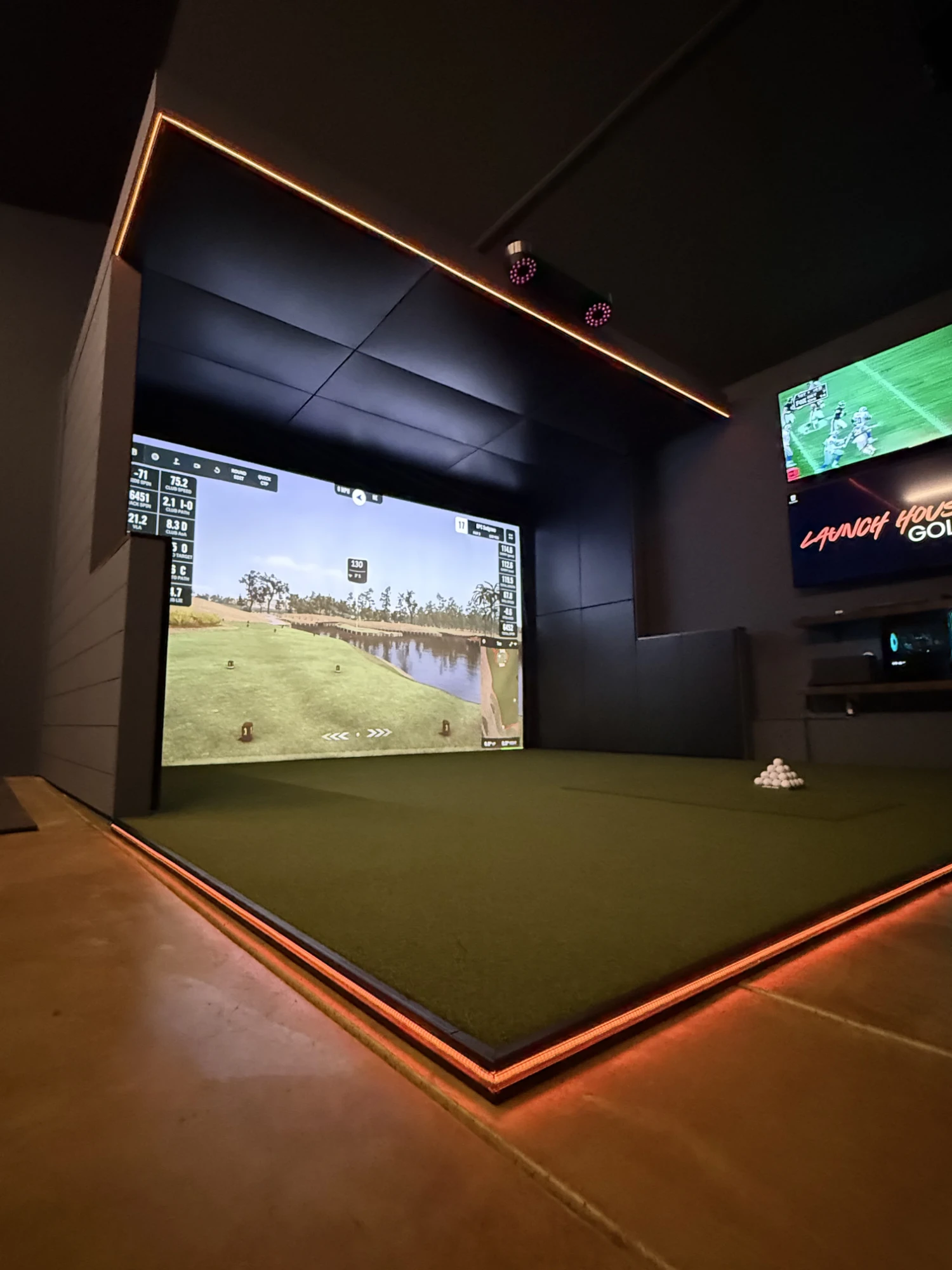
When customers show us photos of manufacturer-installed rooms — the ones that came with the purchase — the work is fine. It's clean. It runs. It also looks identical to every other room they've done, because it's the same kit in every room. You can almost always tell a manufacturer install from a custom build within a few seconds. The kit rooms look like what they are: a technology package placed inside a generic space. Our builds look like the room was designed for that specific house, that specific customer, that specific vision.
That's the standard we hold ourselves to on every project. If a customer can immediately tell which room is ours from a photo, we're doing it right.