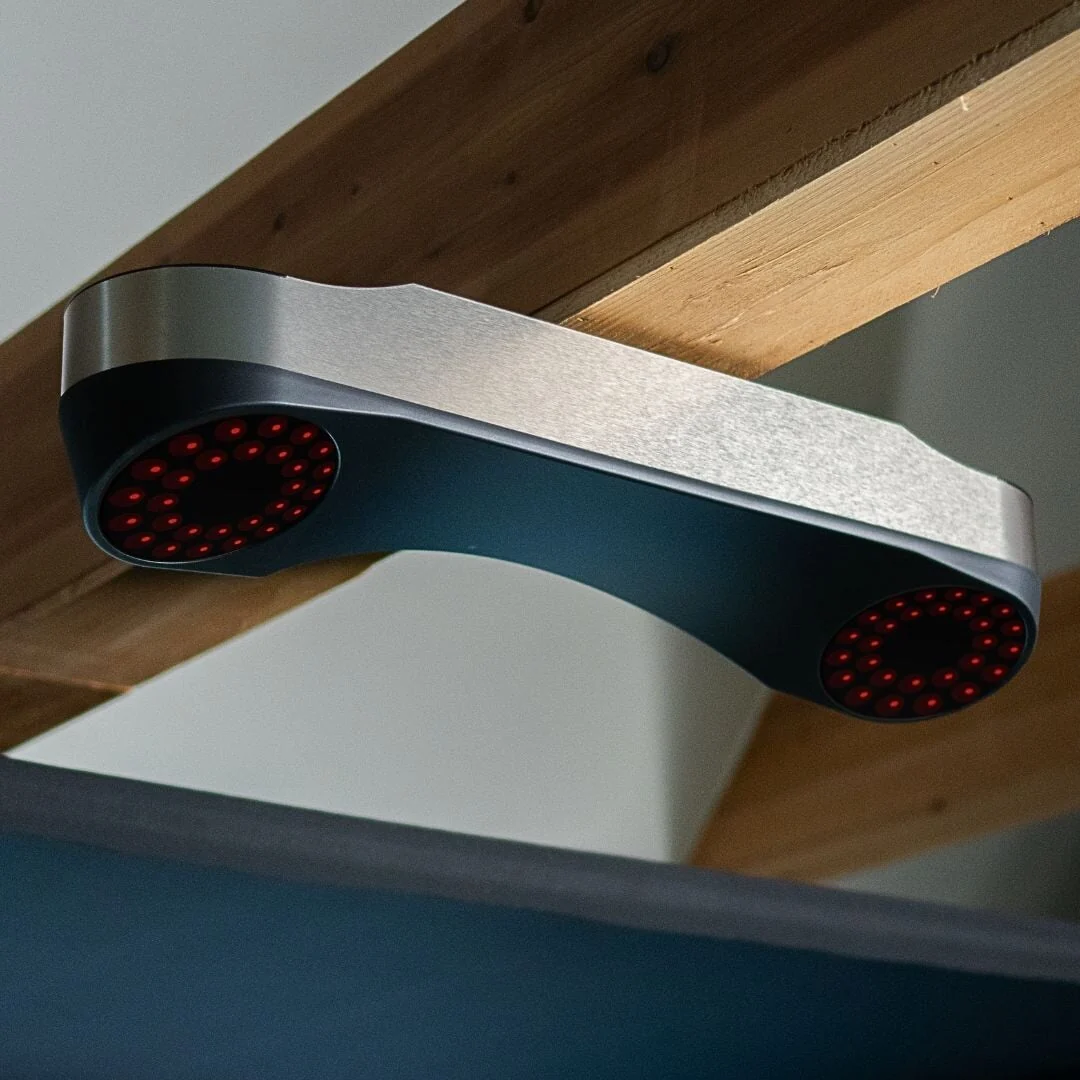
The Uneekor Eye XO2 was, five years ago, a legitimate option in a market that didn't have many. A camera-based overhead unit at a mid-range price point with decent tracking and a recognizable name. We sold it, we installed it, and we supported clients who had it.
The problem isn't that the XO2 is a bad piece of hardware. The problem is that the hardware is surrounded by an ecosystem — software, subscription model, support infrastructure — that has gotten harder to justify every year. While the XO2 has stayed largely the same, the market around it has changed significantly. The ProTee VX now exists. The math has changed.
Here's our full assessment.
The hardware tracks ball flight consistently. Our decision to stop selling it has nothing to do with the hardware. It's the required software platform, the subscription model, and the support infrastructure — all three of which have created an ongoing client experience that doesn't meet the standard we hold for every build we install.
The Hardware — What's Actually Fine
We want to be fair here. The XO2 hardware performs. Ball tracking is consistent, and we've had very few hardware-level failures across the units we've installed.
The ball indicator light is a genuine differentiator. It's a small LED on the unit that tells you at a glance whether the launch monitor is actively reading the ball or has lost track. None of the other units we carry have this. It's a useful quality-of-life detail that we've appreciated in the field.
The hitting zone at approximately 24 by 18 inches is adequate for most players. Club stickers are required to unlock additional data points like angle of attack and shaft lean — no other unit we carry requires this, and all of them deliver that data without stickers. That alone tells you something about the generation of technology the XO2 is built on.
The Software Problem
Everything that follows starts with one requirement: Uneekor View must be running at all times for the XO2 to function. It's the required middleware between the hardware and any simulation software. Whether you're running GSPro, Uneekor's own Game Day, or anything else, Uneekor View has to be active and functioning. If View goes down, the session ends.
That would be fine if View were reliably stable. In our experience servicing XO2 installations, it hasn't been.
- Recurring issues across major updates — a pattern we observed across years of installations: significant updates would release, and with them would come new instability that affected sessions. In our experience, this wasn't an isolated incident.
- Updates install new instances rather than patching existing ones — each software update we observed would install a separate, independent launcher rather than updating the one already there. After several updates, a PC could accumulate multiple Uneekor View launcher icons that all needed to be manually removed.
- CPU-heavy processing — Uneekor View places its processing load primarily on the CPU. On systems built to run simulation software — which typically relies on the GPU — this created thermal pressure and contributed to instability in our experience.
- GSPro connector breaks independently — the connector that links Uneekor View to GSPro has its own update cycle, which in our experience could fall out of sync with View updates, producing sessions where ball data appeared in View but didn't register in GSPro.
Our standard for every build we complete is maintenance-free, consistent performance. A software platform that required the kind of manual cleanup and troubleshooting we observed after XO2 updates doesn't meet that standard — and the support calls that followed reinforced that conclusion across our entire XO2 install base.
The practical impact: Clients with XO2 units called us more than clients with any other launch monitor we install. The vast majority of those calls traced back to Uneekor View — either a failed update, a lost connection to GSPro, or a UI issue that required reverting to an older software version. That's not a one-off; it's the cost of owning the XO2 ecosystem.
The Subscription Model
Full access to Uneekor's software requires an annual subscription. A free base tier exists but is limited in scope. Most buyers end up in a paid tier to get the features that make the XO2 practical to use. Pricing and tier features have changed over time — verify current details on Uneekor's website before making a decision.
In our experience, subscription pricing has increased over the years while the core software product has not seen material updates in that same period. For a buyer looking at total cost of ownership — hardware plus optional swing cameras plus ongoing subscription — the XO2 is more expensive over time than the purchase price alone suggests.
The "AI Swing Trainer"
The higher subscription tiers include access to Uneekor's AI Swing Trainer. It's a marketed selling point worth examining closely — including a detail that's easy to miss before purchasing.
The hardware requirement: AI Swing Trainer requires Uneekor's Swing Optix cameras — two separate high-speed cameras sold as an add-on or bundled only in specific Studio packages. If your XO2 purchase didn't include a Swing Optix bundle, you'll need additional hardware before the feature is accessible regardless of subscription tier.
The system uses those cameras to analyze 60-plus swing checkpoints across eight positions — Address through Finish — and delivers a 0–100 Swing Score along with feedback. Uneekor describes the benchmark as "mechanically sound reference positions." The underlying methodology hasn't been publicly detailed, but the practical result is that your swing is scored against a fixed internal standard rather than evaluated on the outcomes it's producing.
Our concern is with how that approach maps to how modern instruction actually works. Effective coaching is built around each player's individual body mechanics, natural tendencies, and ball flight results. A system that scores your swing against a fixed mechanical standard — without accounting for whether that swing is producing good shots — can generate feedback that conflicts with what a qualified instructor would actually say.
A firsthand example: During a demo session we were involved with, we observed a competitive college-level golfer use the AI Swing Trainer. He was producing consistent 7-irons — 195 yards, straight flight, repeatable. His Swing Score came back in the low 70s out of 100. Based on that score, the system's feedback would have pointed toward changes in a swing that was, by every ball-flight measure, working well. We wouldn't have touched his mechanics. The trainer's benchmark suggested otherwise.
This isn't a claim that AI Swing Trainer has no place — third-party testing has found the root-cause analysis useful in diagnosing specific mechanical issues, and some users report value from it. But buyers expecting genuinely personalized coaching should understand what they're getting: a comparison against a fixed standard, not an individualized assessment based on your own outcomes.
Support Infrastructure
When something goes wrong with an XO2 — and based on our install history, something will — the path to resolution is slow.
In our experience, Uneekor's support process ran through a phone line that routed to voicemail, with callbacks in the 4-to-7-day range. Initial responses tended toward standard troubleshooting steps regardless of the specific issue. More complex problems would escalate, but the depth of resolution available didn't always match the depth of the issue — which meant more time between a problem and a working simulator.
For a reseller like us, this creates a gap we can't close for our clients. When a client's launch monitor goes down on a weekend and Uneekor's response time is measured in days, the call comes to us. We've fielded those calls. After enough of them, the calculus changes.
The Broader Picture
Looking at the XO2's trajectory as a product, a few patterns are worth noting for any buyer evaluating it:
- Limited product iteration over several years. In our assessment, the XO2 as it exists today is largely the XO2 that launched. The market around it has not stood still.
- Game Day, Uneekor's simulation software, launched in early 2025 after being announced years earlier. Early user reports and our own observation indicated significant stability issues in the initial release, including crashes on systems that met or exceeded the stated requirements.
- The XO2 has remained widely available through many retail channels. Market visibility and product reliability are different things — worth keeping in mind when evaluating any purchase that's heavily promoted.
- Subscription pricing has increased over the years while, in our observation, the core software product has not seen material updates in that same period.
XO2 vs. ProTee VX — The Comparison
We now recommend the ProTee VX in place of the XO2 for all buyers. Here's what that comparison looks like on paper:
| Uneekor Eye XO2 | ProTee VX | |
|---|---|---|
| Base unit price | ~$10,000–11,000 | ~$6,500 |
| Swing cameras | +$1,850 add-on | Included |
| Annual subscription | $100–500/yr (required) | None |
| GSPro integration | Paid tier + third-party connector | Free activation |
| Club stickers required | Yes (for full data) | No |
| Software stability | Inconsistent | Stable |
| Support response | 4–7 days (voicemail) | Less needed — fewer issues |
| Available from us | No | Yes |
Based on our estimates using current pricing, an XO2 setup with Swing Optix cameras and a mid-level subscription over three years runs meaningfully higher than a ProTee VX setup with swing cameras and no ongoing subscription cost. The exact gap depends on which tiers and bundles you're comparing, but the direction of that comparison has been consistent in every scenario we've run.
Bottom Line
The Uneekor Eye XO2 is not a bad piece of hardware. We want to be clear about that. If you already own one and the software is currently stable, we're not suggesting you throw it out.
What we're saying is that for a new buyer evaluating options today, the XO2 doesn't compete. The ProTee VX costs less, includes swing cameras, requires no subscription, integrates more cleanly with GSPro, and has created a fraction of the support burden in our experience. The XO2's advantage five years ago was that nothing else existed at its price point. That's no longer true.
We stopped selling the XO2 because we kept getting the calls. We haven't gotten those calls since we moved to the VX.
Evaluating launch monitors? We carry the ProTee VX alongside the Trackman iO and Foresight Falcon. We'll walk you through all three on a live demo — real shots, real data, no pressure. Get in touch to schedule a visit.