Golfzon is the largest golf simulator company in the world. 9,000+ commercial locations across 41 countries. 100 million-plus annual rounds played on their systems. Two South Korean professional tours use Golfzon for tournament data. These aren't marketing numbers — they're the operational footprint of a company that has been building and refining simulators for 25 years.
The TwoVision NX is their current flagship. We've done 20+ Golfzon installs. Here's the complete picture — everything the product page glosses over, and everything that makes it genuinely different from every other system on the market.
What Makes Golfzon Different
Most golf simulators are a launch monitor plus software plus a screen — components that work together but were built separately. Golfzon is a vertically integrated platform. The hardware, software, sensor system, courses, and competitive infrastructure are all designed and built by Golfzon. When something isn't working, there's one company to call. When a feature needs to work perfectly across all layers, there's no integration problem to solve.
The result is a system that does things no other major manufacturer can match. Two of them are genuinely exclusive: the Motion Plate and the auto-tee system.
The Motion Plate — The Feature Nobody Else Has
The Motion Plate is the defining feature of every Golfzon system. No other major simulator manufacturer — not Trackman, not Foresight, not Full Swing — offers anything remotely comparable.
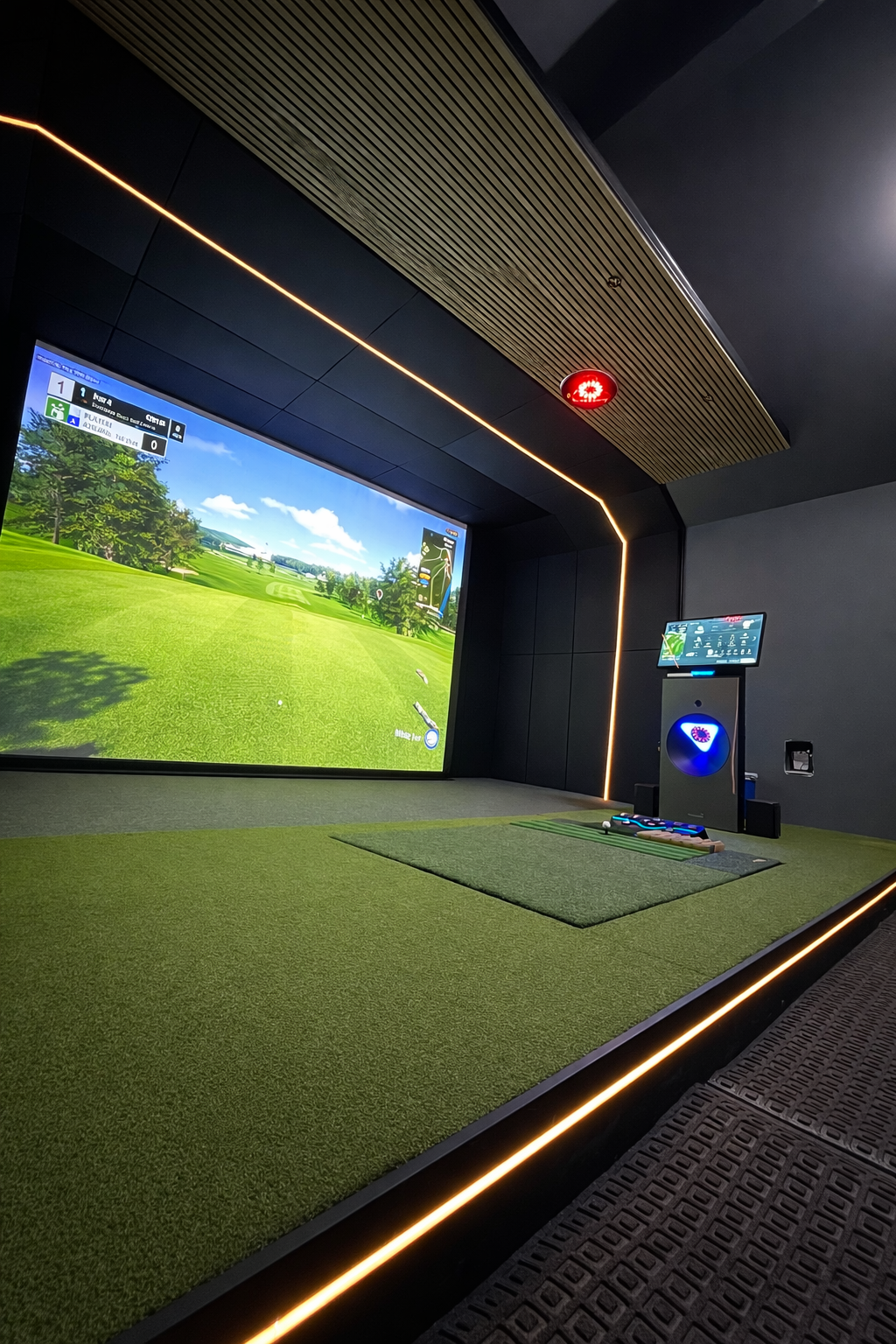
Here's what it does: when your ball lands on the virtual course in a sidehill, uphill, or downhill lie, the platform physically adjusts beneath your feet to replicate that slope. You're hitting off an actual incline, not a flat mat pretending to simulate one.
The engineering behind this:
- 5-segment platform — one hitting mat plus four stance mats surrounding it
- 4 independent motion pods — each segment moves independently to create the correct lie angle
- 64 directional movements — approximately 56,000 possible lie configurations
- 5 hitting surfaces — fairway, light rough, deep rough, fairway bunker, and greenside bunker
This matters more than most people realize until they've used it. Standing on a real 5-degree sidehill lie changes how you address the ball, how you swing, and where the ball goes. On every other simulator, you're always standing flat and making an educated guess about how to adjust. On Golfzon, you're actually playing the lie.
The Motion Plate sits 7.25" above the floor — a critical measurement for ceiling clearance calculations, which we'll cover in room requirements.
The Auto-Tee System
The auto-tee is the second feature unique to Golfzon among major manufacturers. The system automatically collects used tees and loose balls, delivers them to the tee position, and tees the ball at the correct height — automatically, for each player.
Individual tee height preferences are stored per player profile. If you prefer a high tee with the driver and a lower tee for fairway woods, the system remembers that and adjusts without you doing anything. In a commercial environment, this eliminates the ball and tee management friction that slows down every other simulator bay.
For high-volume commercial operators, this feature alone justifies a significant portion of the price premium over alternative systems.
Sensor System & Data
The TwoVision NX sensor system uses dual cameras running at 400 frames per second, with Intel i7 processors handling data processing. It captures 20 data parameters per shot.
TwoVision NX — Data Parameters
To put the accuracy in context: Trackman scores 5/5 and captures 40+ parameters. Golfzon at 4.5/5 with 20 parameters is genuinely accurate golf data — the gap between them matters to coaches and equipment fitters but is invisible to recreational and competitive amateur golfers. The real-world tour validation is meaningful credibility; these are professional events with real money on the line, and they trust Golfzon data.
Unreal Engine 5 Graphics & Courses
The TwoVision NX was the first golf simulator to run on Unreal Engine 5. The visual difference is immediately apparent compared to earlier Golfzon generations and most competing systems.
- 4K resolution output via 7,000–8,000 lumen laser projection
- Dynamic visual details — flags move in the wind, divots form on impact, sand sprays from bunker shots, tees spin after the drive
- 240+ courses in the library, including major championship venues
- No ongoing subscription for course access — courses are included in the system. Some competitors charge $300–$1,200 per year for software subscriptions on top of hardware cost.
The no-subscription model for courses is a meaningful long-term cost advantage. A Golfzon system at $60,000 with no annual software fee is a different total cost calculation over five years than a competing system at $40,000 with $1,000/year in software fees.
Software Modes & Competitive Ecosystem
The TwoVision NX runs three difficulty tiers — Normal, Semi-Tour, and Tour — which adjust how closely the virtual ball behavior matches real-world physics. Normal mode is more forgiving and better for casual and recreational players. Tour mode is tight, accurate, and unforgiving in the right ways.
Game modes available:
- Stroke play, match play, skins, scramble, stableford, and more — 6 tournament modes
- 7 standard game modes for varied play formats
- Arcade Plus with 7 mini-games — specifically designed for entertainment venues where non-golfers or casual players are part of the audience
The competitive infrastructure is where Golfzon separates from the rest of the market. 10,000 simultaneous golfers can compete globally through the Golfzon network. The GOLFZON Tour runs with a $300,000 grand prize (Season 2 figures). GNAT series events are synced with PGA Tour stops with $10,000–$12,000 prize pools. 3.2 million competitive rounds are played annually through Golfzon Live Festival.
No other simulator manufacturer runs a competitive ecosystem at this scale. For commercial operators targeting serious golfers and competitive play, this is a genuine differentiator that drives repeat visits and retention.
Room Requirements
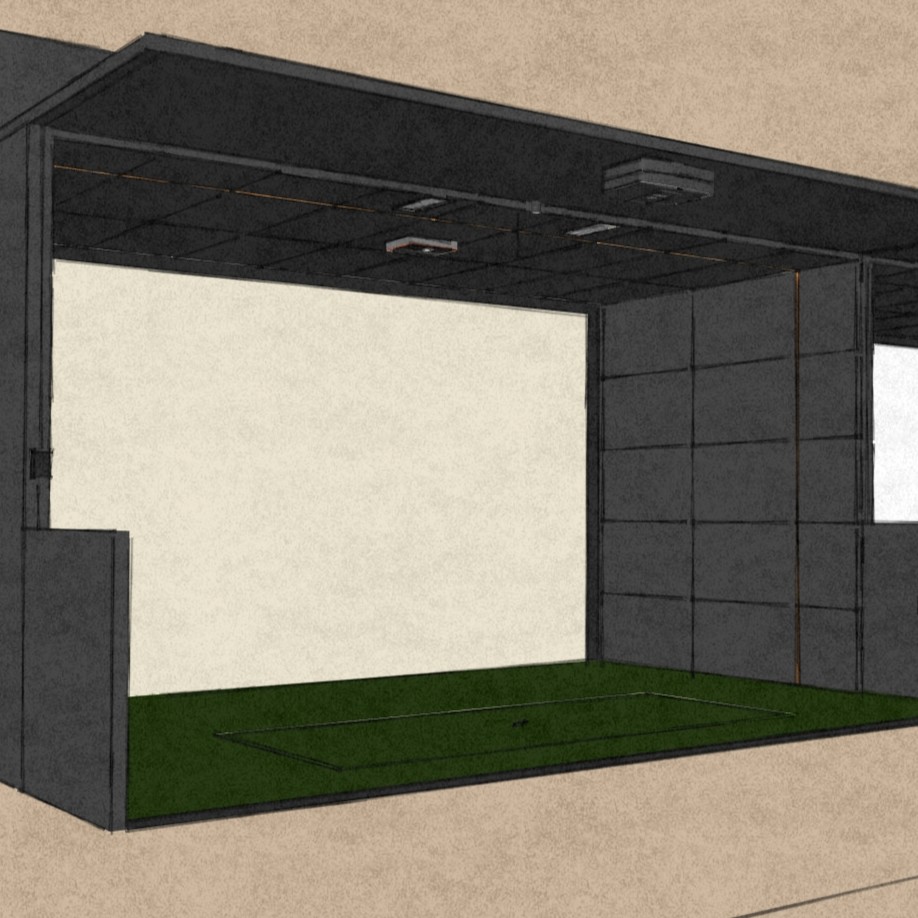
The Motion Plate changes the geometry calculations for Golfzon rooms. The platform sits 7.25" above the finished floor — that comes off your effective ceiling clearance. Plan accordingly.
| Dimension | NX Standard | NX (Full / Both-Handed) |
|---|---|---|
| Ceiling height (min) | 10'2" | 10'8" |
| Width (both-handed) | 13'3" (right-only) | 14'3" |
| Depth (hitting area) | 15'3" | 15'3" |
| Safety clearance (behind player) | 3' minimum | 3' minimum |
| Motion plate height above floor | 7.25" | 7.25" |
| Electrical | 3 dedicated 15A 120V circuits | 3 dedicated 15A 120V circuits |
Ceiling clearance note: The 7.25" platform elevation must be subtracted from your raw ceiling height for clearance calculations. A 10'8" ceiling with a 7.25" platform gives you an effective 10' of clearance above the hitting surface — the true minimum for the NX. Lower than this and driver swings will be compromised.
Pricing & Revenue
Residential TwoVision NX starts at approximately $60,000 for the base configuration — up to $159,000 for a full-scope both-handed motion plate build. Commercial builds with full installation, platform fabrication, enclosure, and environment build-out run higher depending on scope. See the full line-item pricing breakdown →
For commercial operators: Golfzon bays consistently earn $50–$80 per hour at premium venues. At 10+ hours per day, a single bay projects to $150,000–$175,000+ in annual revenue. The competitive ecosystem, auto-tee convenience, and motion plate experience drive premium pricing that other simulator systems don't support at the same level.
The math pencils. We've done it with real operators on real builds. The question is whether the capital and operational commitment is right for your specific business model.
Who It's For
Right For
- Commercial entertainment venues wanting a premium product
- High-volume bays where auto-tee is a real operational advantage
- Operators running competitive leagues and events
- Serious residential buyers who want the most immersive experience
- Venues where course variety and no subscription costs are priorities
Consider Alternatives If
- GSPro, E6, or TGC integration is required — Golfzon is closed ecosystem only
- Budget is under $50,000 for the complete build
- Ceiling height is under 10'2" — this is a hard constraint
- You need coaching data at Trackman-level detail (40+ metrics)
- Software flexibility across platforms is a priority
The closed ecosystem is the honest trade-off to name clearly. You cannot run GSPro courses on a Golfzon system. You cannot switch to E6 or TGC. You're fully in the Golfzon platform. For most commercial operators building around Golfzon, that's completely fine — the platform is excellent. For operators who want to mix software or leverage the large GSPro community course library, it's a real constraint that a Trackman or Foresight build would solve.
What Launch House Provides for Golfzon Builds
We've done 20+ Golfzon installs. The unique engineering requirements of a Golfzon system are different from a standard simulator build. Specifically, we handle:
- Elevated platform fabrication for the Motion Plate — subfloor engineering to meet the 7.25" rise cleanly
- Ball return ramp engineering — routing the ball path from screen to tee position correctly
- Auto-tee gutter system design and integration
- Electrical — 3 dedicated circuits per bay, properly isolated
- Aesthetic environment — we build bays that look like they belong in a premium facility, not just functional boxes
If you're planning a Golfzon build, start with us. The installation requirements are specific enough that getting them wrong at the subfloor or electrical phase creates expensive problems later. See our commercial single bay page for more on what a Golfzon commercial install looks like end to end.
Launch House Golf designs and installs custom golf simulators across the US. Veteran-owned. 200+ builds. 48 states. Authorized Golfzon installer with 20+ completed systems.